Build a botanical notebook without turning it into a recipe
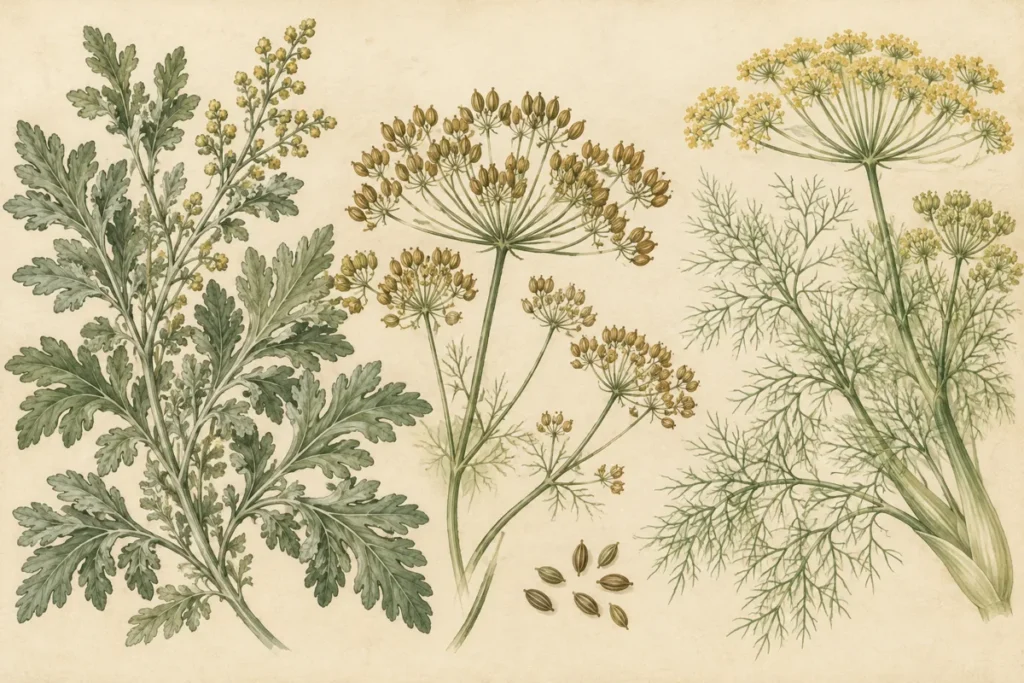
Botanical illustrations invite close attention: the edge of a leaf, the branching of a stem, the difference between a seed head and a flower. A drinks-history notebook can record those shapes without suggesting that an unfamiliar plant is safe to eat or prepare.
Use three columns: the name printed by the source, a description of what you can see, and the source itself. Keep identification separate from resemblance. “Looks like fennel” is an observation, not a reliable identification. Decorative drawings, including the original generated illustration on this journal, are not botanical identification guides.
Record uncertainty in the drawing
Leave an empty box where information is missing. If a museum label gives a common name but no species, copy only that common name. If a historical advertisement shows a stylised plant, write “advertising illustration”. The gaps make the notebook more trustworthy and more useful for later research.
For an accessible first page, compare the silhouettes of three clearly labelled images from a reputable collection. Avoid collecting wild specimens or making drinks from plants identified online. The value of this exercise is visual literacy: noticing which details an illustrator emphasises and which a label leaves unexplained. It can develop into a study of packaging, printmaking or the language of a menu without becoming a preparation manual.